
Fed holds steady but sends hawkish signal; Warsh downplays forward guidance
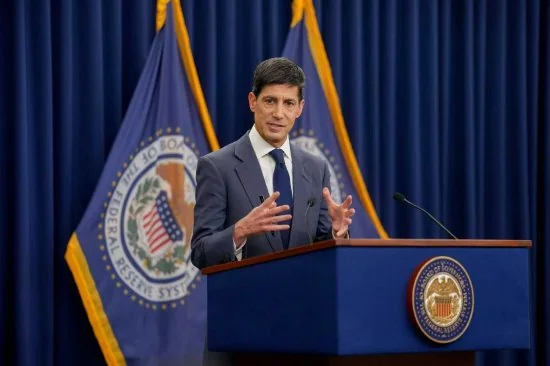
After his first policy meeting as Fed chair, Warsh said the central bank will make restoring price stability its top priority. Earlier, the Fed kept rates unchanged while signaling support for a rate hike this year.
Warsh said at the press conference that persistently high prices are still burdening Americans, but the past does not necessarily dictate the future, and the FOMC will work to achieve price stability.
He also downplayed the importance of his colleagues’ latest rate forecasts. The dot plot showed that 9 of the 19 officials expect at least one 25-basis-point hike this year, and another 6 expect at least two hikes; 9 others expect rates to hold steady or be cut.
Warsh said other officials were also far from certain about their forecasts, and many acknowledged the outlook is highly uncertain. When asked about the rate debate at this meeting, he called it a “healthy internal argument.”
The new chair, a longtime critic of forward guidance, said he personally refused to submit a rate forecast.
The FOMC unanimously voted on Wednesday to keep the federal funds target range at 3.5% to 3.75%.
After the decision, U.S. Treasuries were sold off, the dollar rose and stocks fell. After Warsh’s press conference ended, traders priced a 100% chance of a hike by October.
FOMC statement
The post-meeting statement said inflation remains elevated and officials reiterated their commitment to price stability. The statement continued to describe economic growth as “solid” and noted strong productivity growth and capital investment.
This policy statement was shorter than recent ones. Given Warsh’s pledge to reform the Fed’s communication strategy, the brevity may signal changes ahead.
When he took office last month, Warsh vowed to drive “institutional change” at the central bank. In his opening remarks, he announced several working groups to examine five areas of the Fed’s operations and explore possible reforms.
The groups will study communications, the balance sheet, the Fed’s use of and reliance on existing data sources, productivity and employment, and the central bank’s “inflation framework.” Warsh said the groups will include outside experts and be supported by Fed staff.
In response to questions, he ruled out revisiting the 2% inflation target and said there is no reason to reopen the issue until the Fed has re-proved its ability and determination to achieve 2% inflation.
Policymakers made several changes to the economic projections released in March: the median inflation forecast for this year was raised from 2.7% to 3.6%, and the 2026 core inflation forecast was raised from 2.7% to 3.3%.
Meanwhile, officials lowered the median 2026 GDP growth forecast to 2.2% from 2.4% in March, and cut the median forecast for the unemployment rate at the end of 2026 to 4.3% from 4.4%.
When asked by reporters in France on Wednesday about the Fed keeping rates unchanged, President Trump said it was “fine, either way.” But when asked about a possible rate hike, he said it would hurt the U.S. economy, adding that the Fed now has a very good person and he would respect his thinking.

